The Red Thread of Fate: The Myth
There is an old legend that speaks of an invisible red thread.
It is said that this thread is tied around the fingers — or sometimes the ankles — of two people who are destined to meet. No matter the time, distance, or circumstances, the thread may stretch or tangle, but it will never break.
This is the myth of the Red Thread of Fate.

Its origins are often traced back to Chinese folklore, particularly the story of Yue Lao, the old lunar matchmaker who binds people together with red cord. Over time, the legend travelled through East Asia and became woven into Japanese culture as well — where red thread symbolism is deeply tied to connection, destiny, and unseen bonds.
The thread is not about control.
It is about inevitability.
Not in a rigid or predetermined sense, but in the way certain encounters in life feel unmistakable. As though something ancient and quiet has guided you there.
Many people interpret the red thread as romantic destiny. But the legend is broader than that. The thread can connect you to a teacher, a friend, a calling, a place, a season of your life.
Or even to yourself.
Sometimes the thread leads you toward healing.
Sometimes it leads you toward change.
Sometimes it leads you back to who you were before the world asked you to become something else.
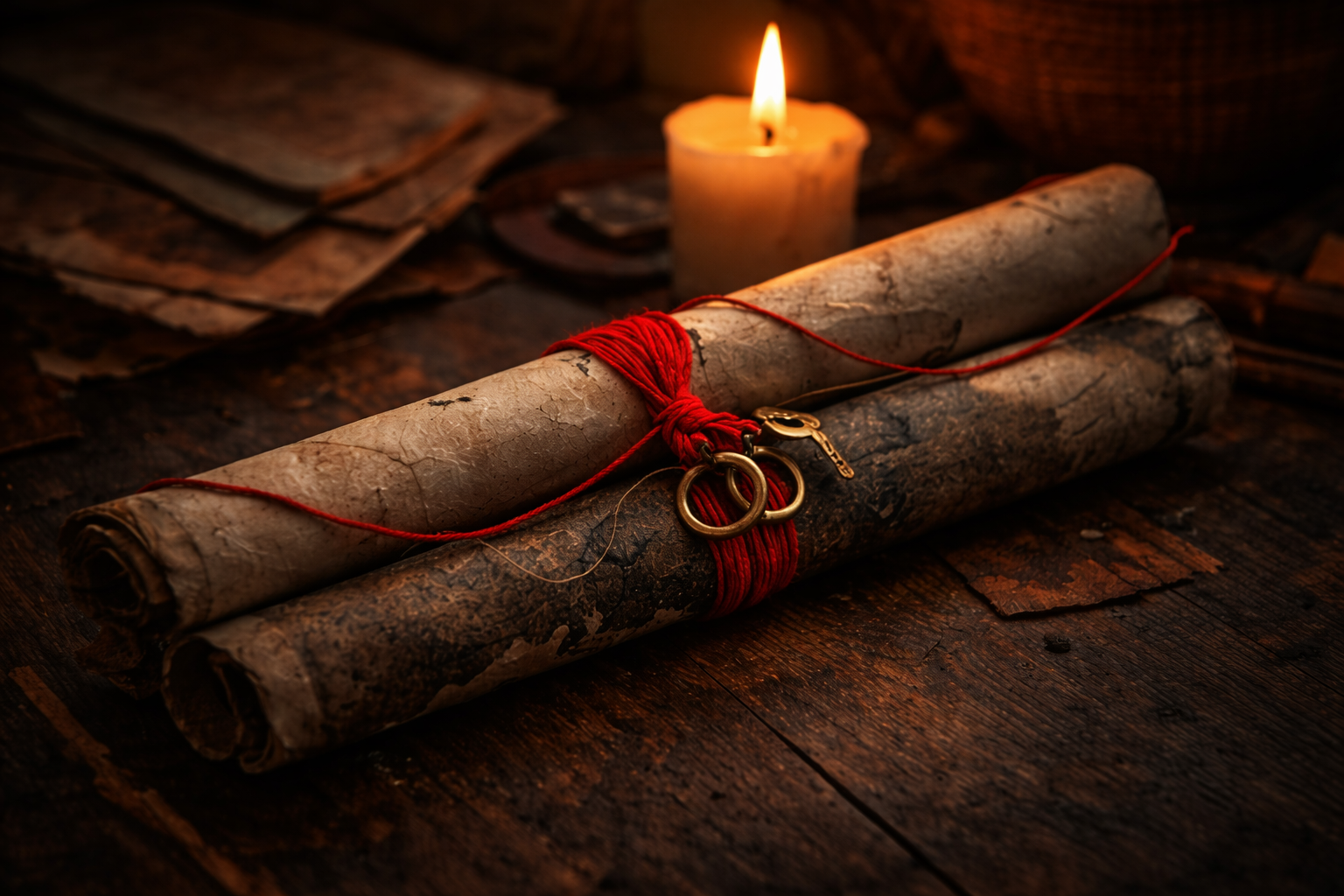
The Symbolism of Red
In many Eastern traditions, the colour red represents vitality, protection, and life force. It is bold and visible. It carries warmth and movement.
In Reiki philosophy, we speak often of energy — the subtle current that animates the body and connects all living things. Red, in its most grounded form, represents safety, survival, and stability. It is the colour of the root chakra — the place where we feel secure enough to exist.
A red thread, then, is not fragile.
It is resilient.
It stretches across time and distance because it is woven into the fabric of life itself.

Fate vs. Free Will
A common question arises when we speak of destiny:
If the thread cannot break, do we have a choice?
The legend doesn’t suggest passivity. It does not ask us to sit back and wait for life to happen. Instead, it invites awareness.
The thread may be there — but we must choose to follow it.
We feel it as intuition.
As repetition.
As a quiet inner knowing.
It shows up as something that returns again and again in your life. A curiosity that won’t leave. A place that calls you back. A practice that continues to soften you each time you return.
In that way, the red thread is less about prediction and more about alignment.
You are not dragged by it.
You are guided.
The Red Thread and Healing
In healing work, especially energy healing, there is often a moment when someone says:
“I don’t know why I booked this… I just felt called.”
That feeling is the thread.
It is subtle. It is not loud or forceful. It feels more like a gentle pull than a push.
Healing rarely begins with certainty. It begins with curiosity. With openness. With a willingness to explore what is already unfolding beneath the surface.
When we ignore the thread, life can feel forced or disconnected. When we follow it, things may still be challenging — but they feel meaningful.
There is coherence.
In my own journey, the red thread has not always been obvious. It has appeared in seasons of restlessness, in long walks, in quiet reflection. It has led me toward art, toward pilgrimage, toward energy work. Not through dramatic signs, but through steady repetition.
Through returning.
And returning again.
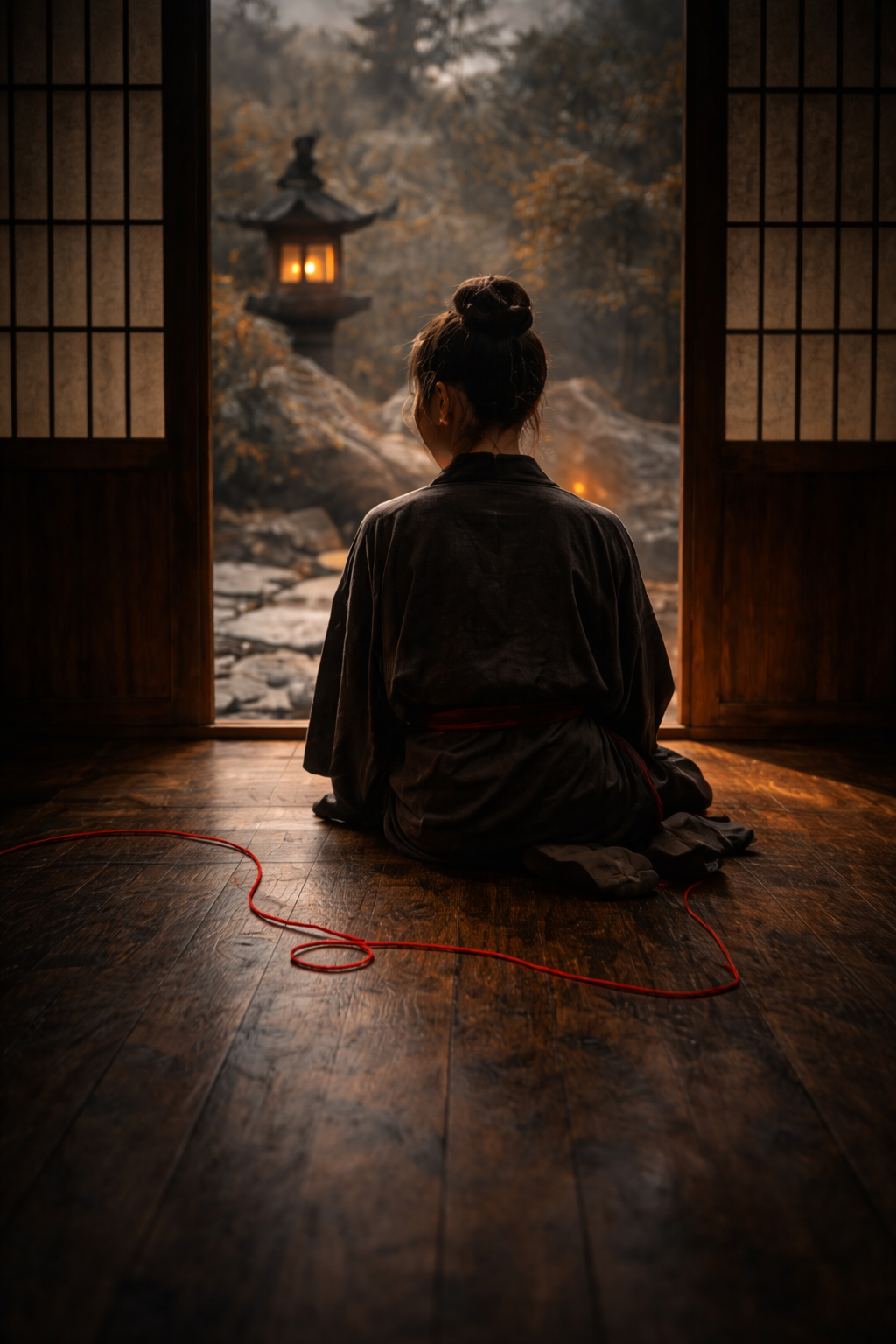
A Living Myth
The power of myth is not in whether it is literal.
It is in what it teaches us.
The red thread reminds us that connection exists even when we cannot see it. That timing matters. That certain people and experiences enter our lives at precise moments for reasons we may only understand later.
It also reminds us that healing is rarely random.
You are not here by accident.
You did not land in this season without purpose.
You are not drawn toward certain practices without reason.
The thread may stretch across years. It may tangle. It may feel distant at times.
But it does not break.
And perhaps the most important thread of all is the one that connects you back to yourself — to your body, your intuition, your sense of inner steadiness.
Following that thread is not dramatic.
It is quiet.
It is consistent.
It is the practice of noticing what feels aligned and having the courage to move toward it.
If fate has brought you here, maybe it isn’t about coincidence.
Maybe it’s about connection.
And maybe the thread has been guiding you longer than you realized.
